Japan travel extras
How to visit a Japanese shrine
Bow at the gate, wash at the fountain, two bows, two claps, one bow. A step-by-step guide to shrine etiquette, from the torii to the fortune slips.

Shinto shrines (神社, jinja) are everywhere in Japan, from giant complexes in Kyoto to a single stone altar on a street corner. Anyone can visit, whatever their religion. Nobody expects visitors to be perfect, but following the basic steps is a simple way to show respect, and it makes the visit feel more complete.
1. Bow at the torii
The 鳥居 (torii) gate marks the line between the everyday world and sacred ground. Stop before you walk through and give a small bow.
On the approach path, walk slightly to the left or right. The center is traditionally kept clear for the gods.
2. Purify at the water basin

Near the entrance you’ll find a stone basin with ladles, called the 手水舎 (temizuya). Washing here is a symbolic cleansing before you meet the gods.
- Hold the ladle in your right hand, scoop water and pour a little over your left hand.
- Switch hands and pour water over your right hand.
- Switch back, pour a little water into your cupped left hand and rinse your mouth with it. Never put the ladle to your lips. Spit quietly beside the basin, not into it.
- Pour water over your left hand once more.
- Tilt the ladle upright so the rest of the water runs down the handle, then put it back.
Use one scoop for the whole sequence. Some basins now use flowing water, or have no ladles for hygiene reasons. In that case, just rinse your hands under the stream.
3. Make your offering
At the main hall, stand in front of the wooden offering box (賽銭箱, saisen-bako) and gently toss in a coin. Any amount is fine. A 5-yen coin is a popular choice, because go-en sounds like the word for a good connection. If there’s a bell with a thick rope, shake it once or twice to announce yourself.
4. Two bows, two claps, one bow
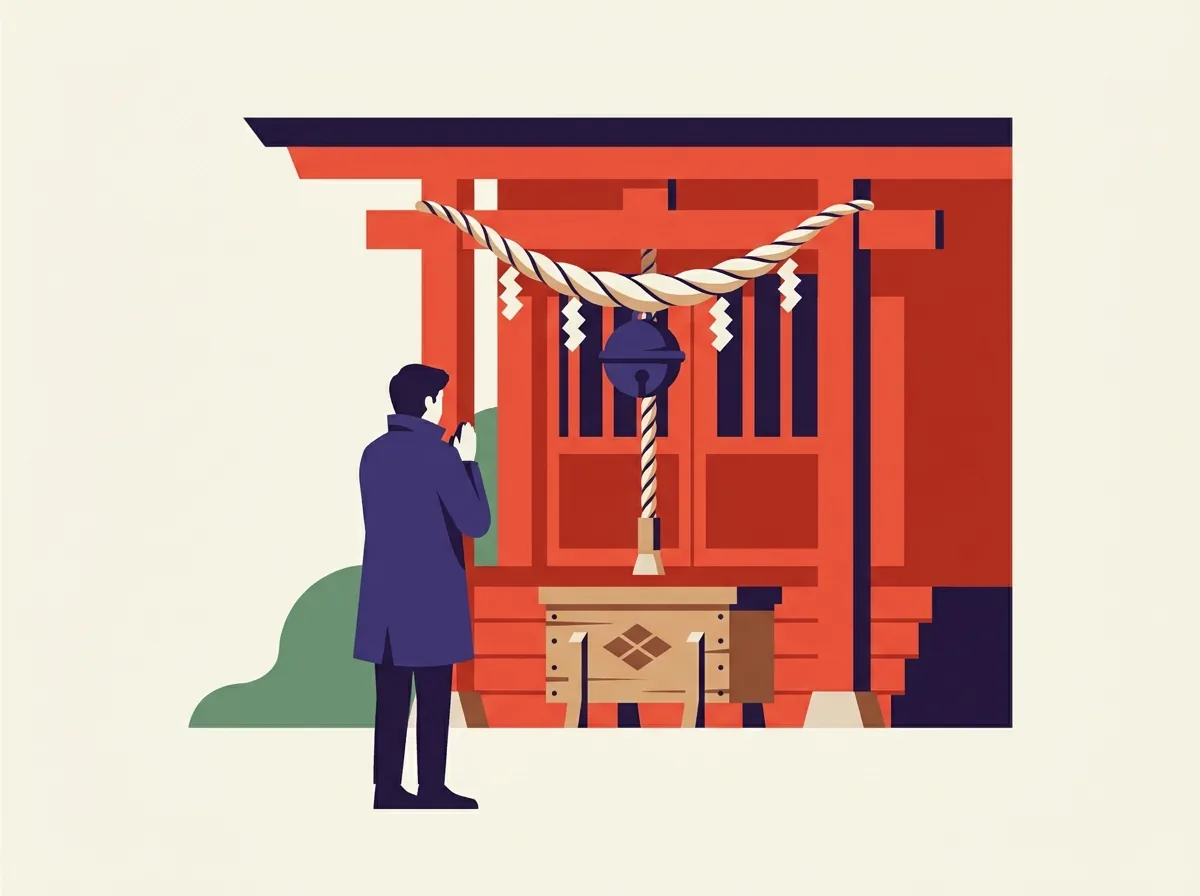
This is the standard way to pray at most shrines. The Japanese name, 二礼二拍手一礼 (nirei nihakushu ippai), describes it exactly:
- Bow deeply twice, bending at the waist.
- Clap twice, with your hands at chest height.
- Keep your hands together and make your wish or say thank you silently.
- Bow deeply once more.
A few famous shrines use a different count. Izumo Taisha in Shimane, for example, uses four claps. If there’s a sign, follow it.
5. On your way out
When you leave through the torii, turn around and give one more small bow toward the main hall.
Fortunes, charms and stamps
- Omikuji (おみくじ): a paper fortune for a small fee. If you draw a bad one, tie it to the rack or rope provided and leave the bad luck behind.
- Omamori (お守り): charms for safe travel, health, study, love and more. They make good souvenirs.
- Ema (絵馬): small wooden plaques where visitors write their wishes and hang them up.
- Goshuin (御朱印): a hand-written calligraphy stamp in a special notebook, usually for a few hundred yen. Ask politely at the shrine office. It’s a record of a visit, not a tourist stamp.
Small courtesies
- Keep your voice down, and don’t eat while walking on the grounds.
- Photos are usually fine outdoors. Don’t photograph inside halls or during ceremonies unless a sign says it’s allowed.
- Hats off in front of the main hall.
Shrines and temples look alike at first glance but work differently. See shrine or temple? How to tell the difference.