Onsen ryokan
温泉旅館A traditional inn built around its own hot spring. Staying the night gets you the baths, often at any hour.
Japanese bathing has a set order. Once you know it, every hot spring, bathhouse and sauna in the country works the same way. Tattoos included.
Look for these two characters on the entrance curtains. The colors vary, so read the kanji rather than the color.
They share the same bathing rules, but they differ in price, what's provided and how strict they are about tattoos.
A traditional inn built around its own hot spring. Staying the night gets you the baths, often at any hour.
A hot-spring bath you can visit without staying. It's usually in a resort town, and many have outdoor pools.
The neighborhood bathhouse. It's cheap, it's everyday life for locals, and it's usually the most relaxed about tattoos.
A large leisure bath complex with many pools, saunas, restaurants and nap rooms. It's popular with families.
A sauna-first venue, usually in a city. You alternate hot room, cold plunge and rest until you feel what locals call totonou.
This is the order at almost every bath in Japan. Most mistakes happen in steps 5 and 7: people skip washing, or they let the towel touch the water.
Arriving
Put them in a shoe locker (下足箱). Many lockers lock with a wooden or plastic key. Keep that key, because some places exchange it for your changing-room key.
There are three common ways. At a sento you pay a person at the counter. At many day-trip onsen you buy a ticket from a machine and hand it over. At a super sento you often get a wristband with a barcode, and everything you buy inside goes on it until you pay on the way out.
Tip: if the tattoo question worries you, ask here, before you pay. The phrases below will help.Men go through 男 and women through 女. At ryokan the two sides often swap overnight so guests can try both baths, so read the curtain every time.
In the changing room
Put your clothes in a basket or locker. No swimsuits and no underwear. Everyone is naked, and nobody is looking.
Take in with you: only the small towel. The large towel stays in the locker for later.In the bathing room
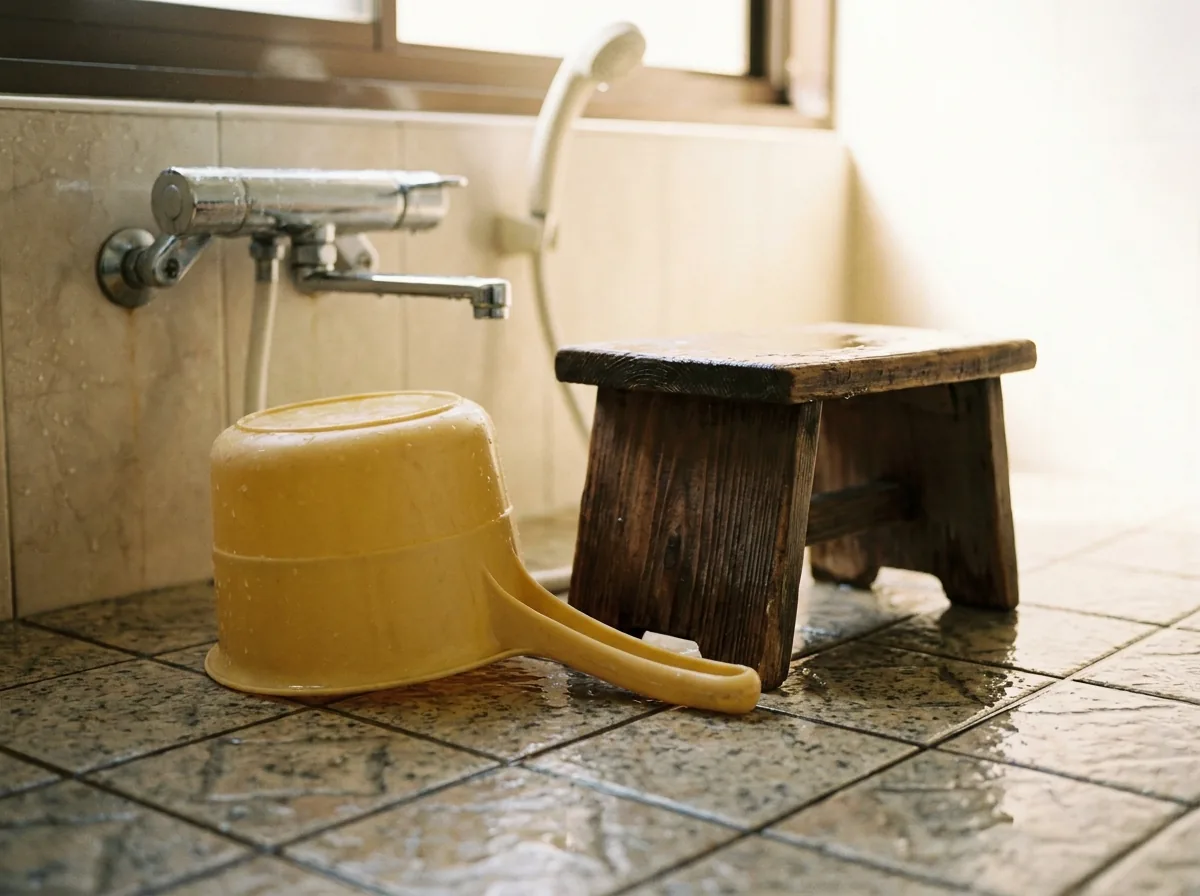
Sit on a stool at a shower station and wash your whole body and hair with the soap provided. Rinse off all the soap. Then rinse the stool and bowl for the next person.
Why it matters: everyone shares the same water. Washing first is the one rule no bath will bend.Scoop a few bowls of water from the bath and pour it over your feet, then your legs and body. This is kakeyu. It gets your body used to the heat and shows people you've washed.
Lower yourself in gently. The small towel never goes in the water. Fold it on your head, or leave it on the side. Tie up long hair so it stays out of the water too.
Sit, relax and talk quietly. Most baths are 40–42°C, so 5 to 10 minutes at a time is plenty. Get out, cool down, and go back in as often as you like. Try the outdoor bath (露天風呂) if there is one.
Do sauna → cold plunge (水風呂) → rest outside, and repeat two or three times. Sit on a sauna mat or your towel. Rinse off your sweat before the cold plunge, and get in slowly.
Finishing
At a mineral hot spring, many people skip the final rinse so the minerals stay on their skin. At a sento, rinsing off is normal. Either is fine.
Wring out the small towel and wipe yourself down while you're still in the bathing room, so you don't drip on the changing-room floor.
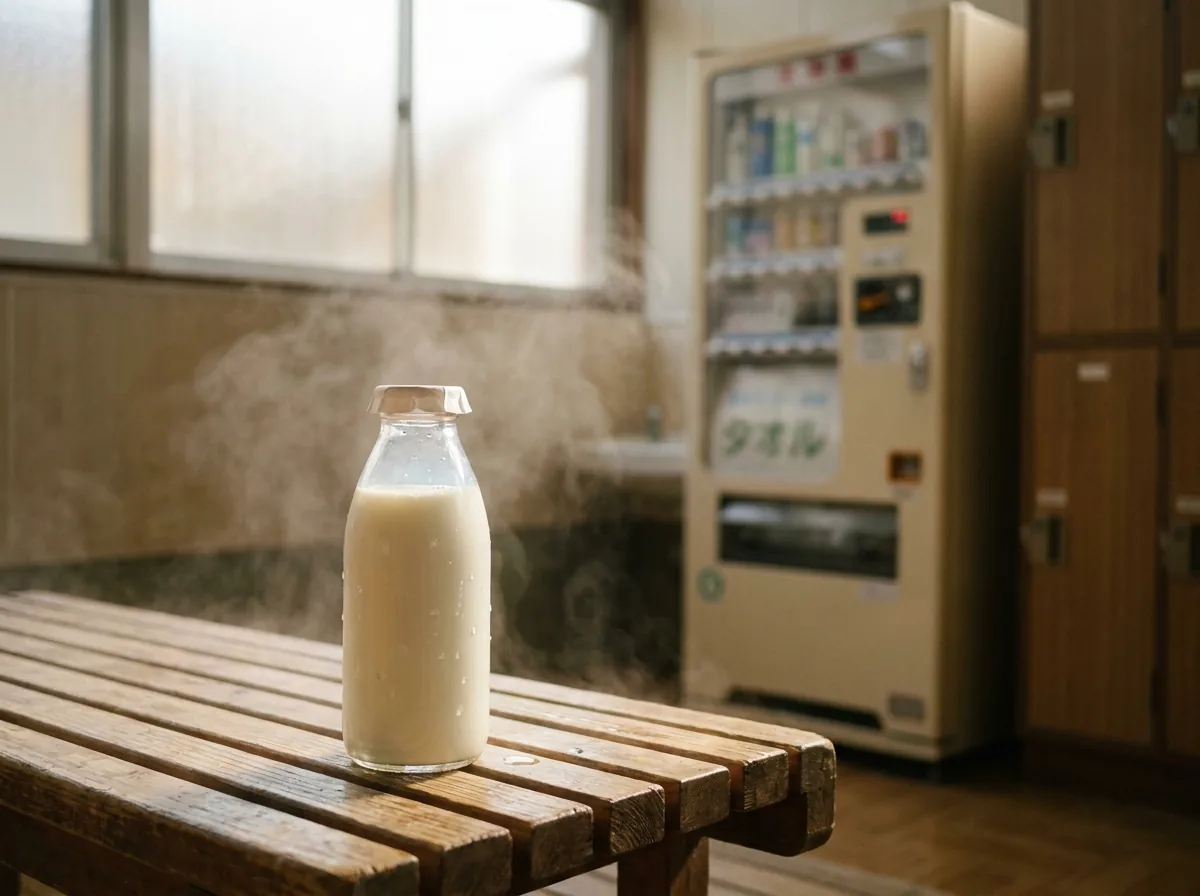
Drink some water, or try the classic bottle of milk from the vending machine. Super sento and ryokan have lounges for resting. Most people stay one to two hours in total.
Nobody expects perfection from a first-timer. These are the things regulars actually notice.
If you don't have something, you can nearly always rent or buy it at the counter. A small towel costs about ¥100–300.
| Onsen ryokan | Day-trip onsen | Sento | Super sento | Sauna | |
|---|---|---|---|---|---|
| Towels | Provided | Often rent or buy | Bring or buy | Often included or rent | Usually provided |
| Soap & shampoo | Provided | Usually provided | Often bring your own | Provided | Provided |
| Lounge wear | Yukata in your room | — | — | Often provided | Often provided |
| Hair dryer | Yes | Yes | Coin-operated | Yes | Yes |
| Typical price | With your stay | ¥500–1,500 | ¥500–600 (Tokyo) | ¥800–2,500 | ¥1,500–4,000 |
| Tattoo policy | Varies by inn | Varies | Often relaxed | Often strict, some allow covers | Often relaxed |
Many Japanese baths have long refused tattooed guests, because tattoos are associated with organized crime. Since 2016 the Japan Tourism Agency has urged baths to find ways to accommodate visitors, and more of them say yes every year. Our map sorts every bath into one of four answers.
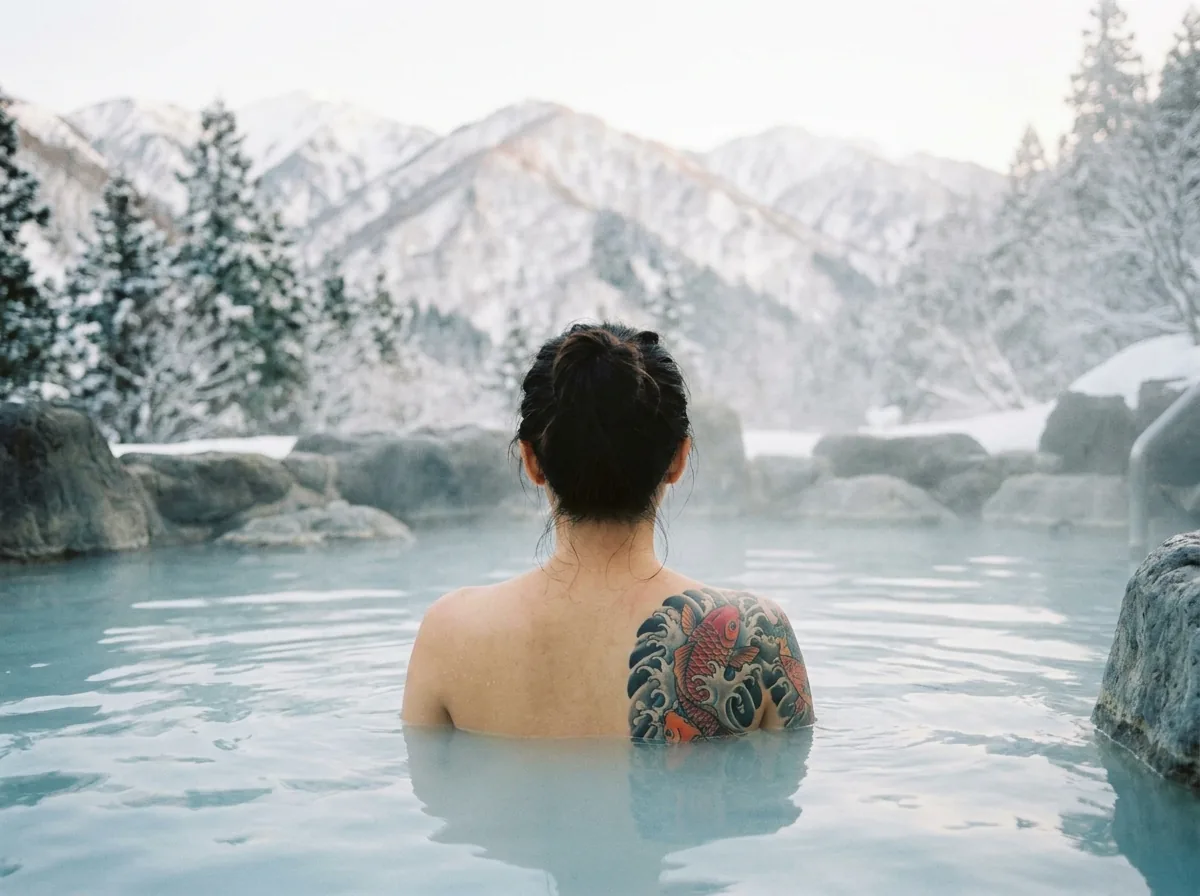
Tattoos of any size are fine. No cover needed.
Allowed if a skin-colored patch hides the tattoo. There's usually a size limit.
Not in the shared baths, but you can use a private bath or a room with its own bath.
Tattoos aren't accepted, even with a cover. Staff will ask you to leave if they notice.
Tap Show to fill the screen, then turn your phone toward the staff member.
You'll see these on doors, maps and price lists.
Japanese baths are hotter than most people expect. Keep these in mind.