





Japan travel extras
Yukata and kimono: the difference, and how to wear them
Cotton for summer nights, silk for special days, and always left over right. How to wear a ryokan yukata, a festival yukata and a rental kimono without a fuss.
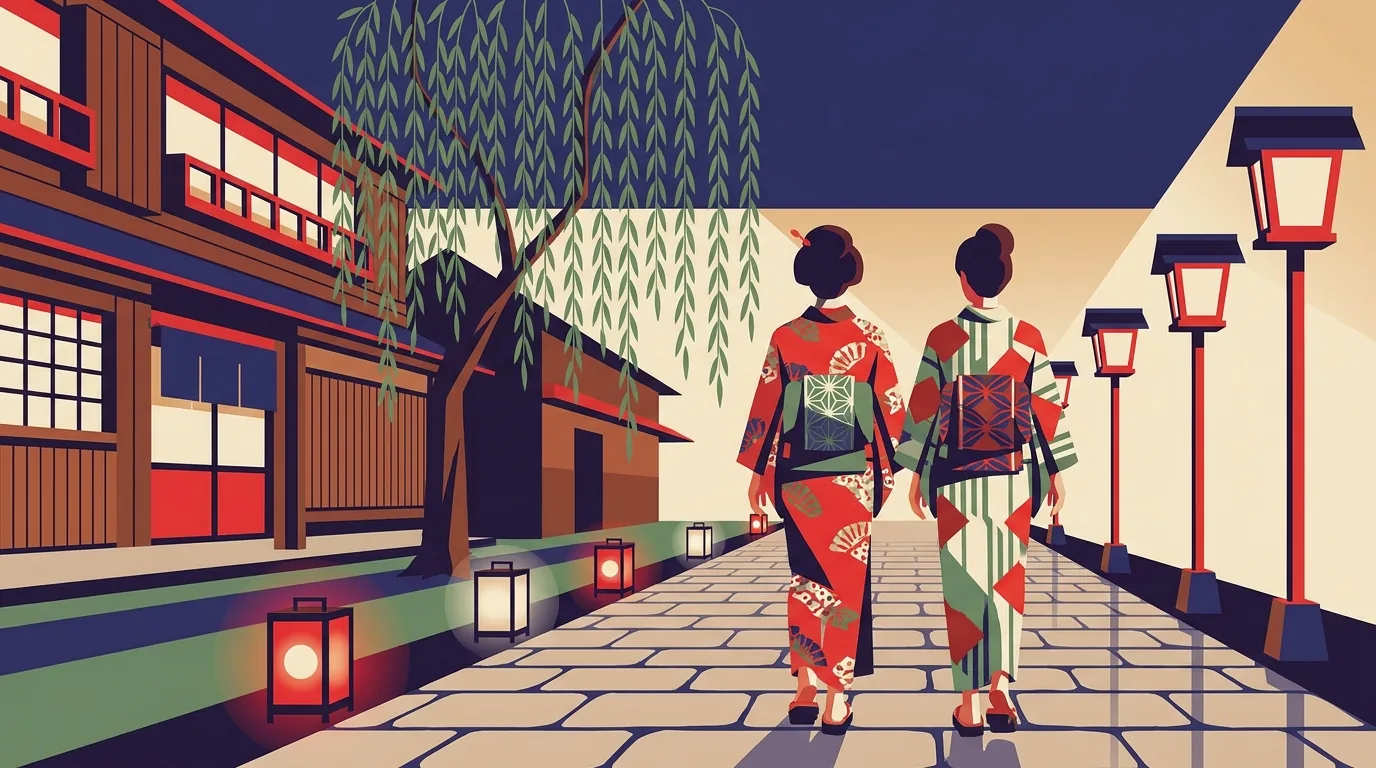
Put on a yukata at an onsen ryokan and you’ll feel like you’ve stepped into another era. Rent a kimono in Kyoto and the city looks different from inside one. Both are Japanese robes wrapped around the body and tied with a sash, but they are not the same garment, and they’re worn in very different settings. The good news: the one rule that really matters is the same for both.
Yukata vs kimono at a glance
| Yukata 浴衣 | Kimono 着物 | |
|---|---|---|
| Fabric | Light cotton or linen-like blends | Silk, wool or polyester |
| Season | Summer, and all year at onsen inns | All year, with different weights for each season |
| Layers | One layer, worn over underwear | Several, including an under-robe (nagajuban) |
| Collar | No visible under-collar | A second collar shows at the neck |
| Feet | Bare feet in geta sandals | White tabi socks with zōri sandals |
| Occasions | Ryokan, festivals, fireworks, summer evenings | Weddings, tea ceremony, New Year, coming-of-age day, sightseeing |
The name gives away the yukata’s origins. 浴衣 literally means “bathing clothes”. It began as a simple cotton robe worn in and after the bath, and over time it became casual summer wear. The kimono (着物, literally “thing to wear”) is the older, more formal family of garments, layered and fitted with care, and today mostly saved for special days.
The one rule: left over right
However you wear it, the left side of the robe goes over the right. Wrap the right panel against your body first, then fold the left panel on top. Looking at someone wearing it correctly, the collar forms a lowercase “y”.
This is the same for men and women. The reverse, right over left, is how the dead are dressed for their funeral, so getting it backwards is the one mistake that Japanese people will genuinely notice. A handy check: you should be able to slip your right hand into the front fold of your robe, as if reaching into an inside pocket.
Wearing the ryokan yukata
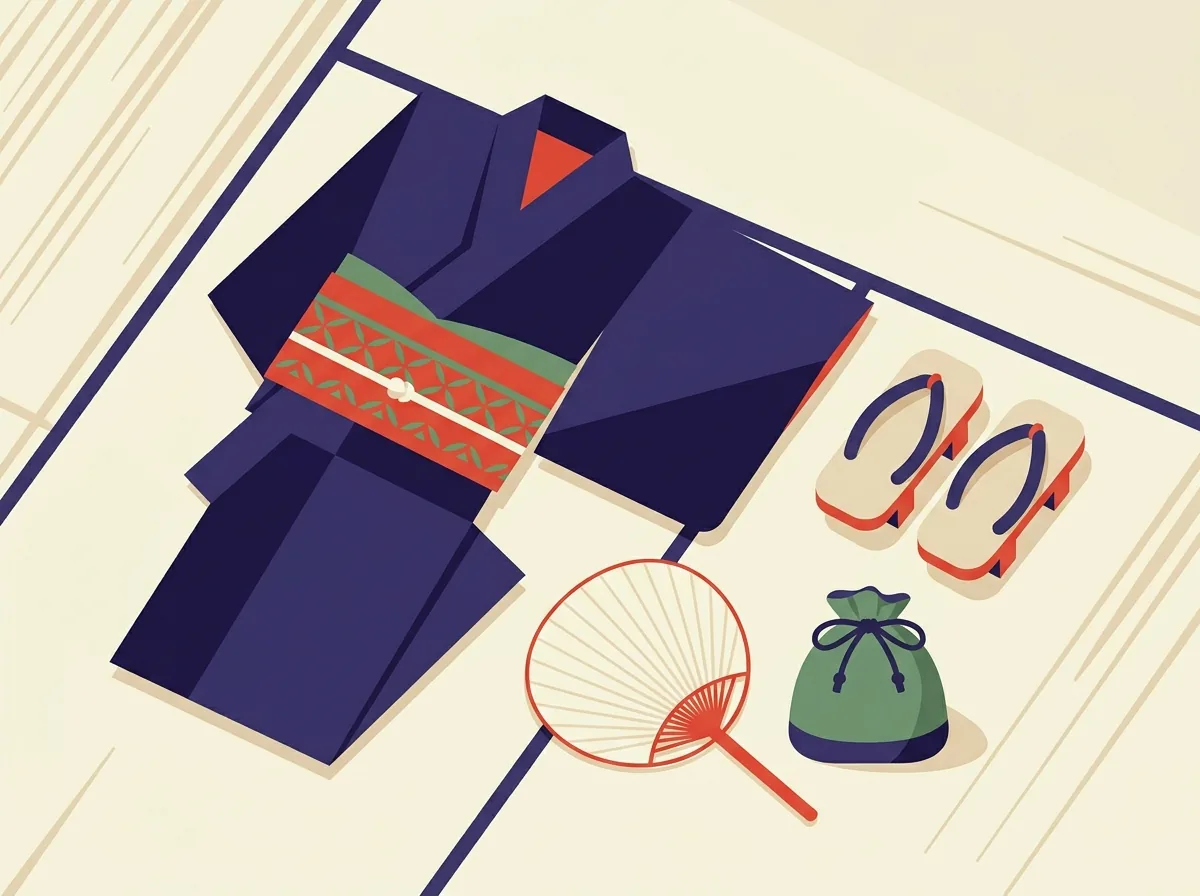
Almost every onsen ryokan leaves a folded yukata in your room, usually with a thin sash and, in cooler months, a padded jacket. Staff sometimes lay out several sizes, or you can ask at the front desk for a bigger one. Some inns let women pick a patterned yukata from a rack in the lobby.
- Underwear on. Wearing your usual underwear underneath is normal and expected. Some women add a thin camisole.
- Wrap left over right. The hem should fall around your ankles. If it’s dragging on the floor, ask for a smaller size.
- Tie the sash. Men wrap the thin sash low, around the hips, and tie it at the side or back. Women tie it higher, at the waist. A simple bow or knot is fine.
- Add the jacket in winter. The 丹前 (tanzen) or 羽織 (haori) goes on top. Match its collar to the yukata: left over right again.
- Slippers or geta. Use the inn’s slippers inside, and the wooden sandals by the door if you step outside.
Where you can wear it
The room yukata is loungewear with a special status. Inside the ryokan it goes almost everywhere: the corridors, the baths, the dining room and the gift shop. In classic hot spring towns such as Kinosaki, Ginzan or Kusatsu, guests stroll the streets in their inn’s yukata and wooden sandals, and that is half the charm. In Kinosaki, hopping between the town’s seven public baths in yukata is the whole point of a visit.
What it isn’t is a going-out outfit. Don’t wear the ryokan’s yukata on the train, to a restaurant outside the onsen area, or into a city hotel lobby. If you’re not sure, ask at the front desk. Leave it in your room when you check out; it belongs to the inn.
Festival yukata
In summer, yukata move out of the inn and into the streets. At fireworks shows (花火大会, hanabi taikai), summer festivals (夏祭り, natsu matsuri) and Bon dances, many young people wear bright cotton yukata with a wide sash, the 帯 (obi).
- Women’s obi are wide and usually tied in a bow at the back. Pre-tied, clip-on versions are common and perfectly acceptable.
- Men’s obi are narrow and tied low on the hips, with a simple knot at the back.
- Getting dressed. Rental shops, department stores and some hotels offer dressing help (着付け, kitsuke). Staff will wrap and tie everything in about 15 minutes, so you don’t need to learn it yourself.
Yukata are worn with bare feet in 下駄 (geta), wooden sandals with a thong. They take some getting used to, so bring a bandage for the spot between your toes.
Renting a kimono
Kimono rental shops cluster around sightseeing areas: Gion and Kiyomizu-dera in Kyoto, Asakusa in Tokyo, Kawagoe, Kanazawa and more. Most offer a set price that includes the kimono, obi, bag, sandals and dressing, and often hair styling for a little extra. Book online in peak seasons. In summer many shops switch to yukata, which are cooler and cheaper.
Expect the dressing to take 30 to 60 minutes. A kimono has more layers than a yukata: a thin under-robe called the 長襦袢 (nagajuban), whose white collar shows at the neck, then the kimono itself, several cords and a stiff obi. It’s snug around the middle by design. Wear a thin top with a wide neck under your own clothes so you can change easily, and skip big earrings or high hairstyles until you arrive.
With a kimono you wear 足袋 (tabi), split-toe cotton socks, with 草履 (zōri), flat, closed sandals. The shop provides both.
Moving in a kimono
- Small steps. Walk with short strides and toes pointing slightly inward. The robe is designed for it, and long steps will pull it open.
- Hold your sleeve. When you reach for something, hold the opposite sleeve with your free hand so it doesn’t drag across food or brush a candle.
- Sit carefully. Sit near the front of the seat with a straight back so you don’t crush the obi bow against the chair.
- Toilets. Western-style toilets are easier. Gather the layers up one at a time and hold the long sleeves out of the way. Rental staff can clip everything up for you if you ask.
- Rain. Silk hates water. If rain is forecast, choose a polyester kimono, which most rental shops offer, and borrow an umbrella and sandal covers.
Is it okay for visitors to wear one?
Yes. In Japan, foreigners wearing yukata and kimono is overwhelmingly seen as appreciation, not appropriation. Shopkeepers will often compliment you, and locals may ask for a photo. The only real faux pas are wrapping it right over left and treating a rental carelessly: don’t sit on the ground in it or eat messy street food on the go.
A note for tattooed travelers
A yukata covers most of the body, so it’s a comfortable way to walk around a ryokan without drawing attention to your ink. But it’s clothing, not a pass: you still take it off to bathe, and the bath’s tattoo rules still apply. To find out why the rules exist and how to work with them, read why some Japanese baths refuse tattoos.