





Japan travel extras
Matcha or green tea? A guide to Japanese tea
Same plant, very different cups. How matcha, sencha, gyokuro, hojicha and more are made and drunk, plus tea house etiquette, brewing tips and where to try it.
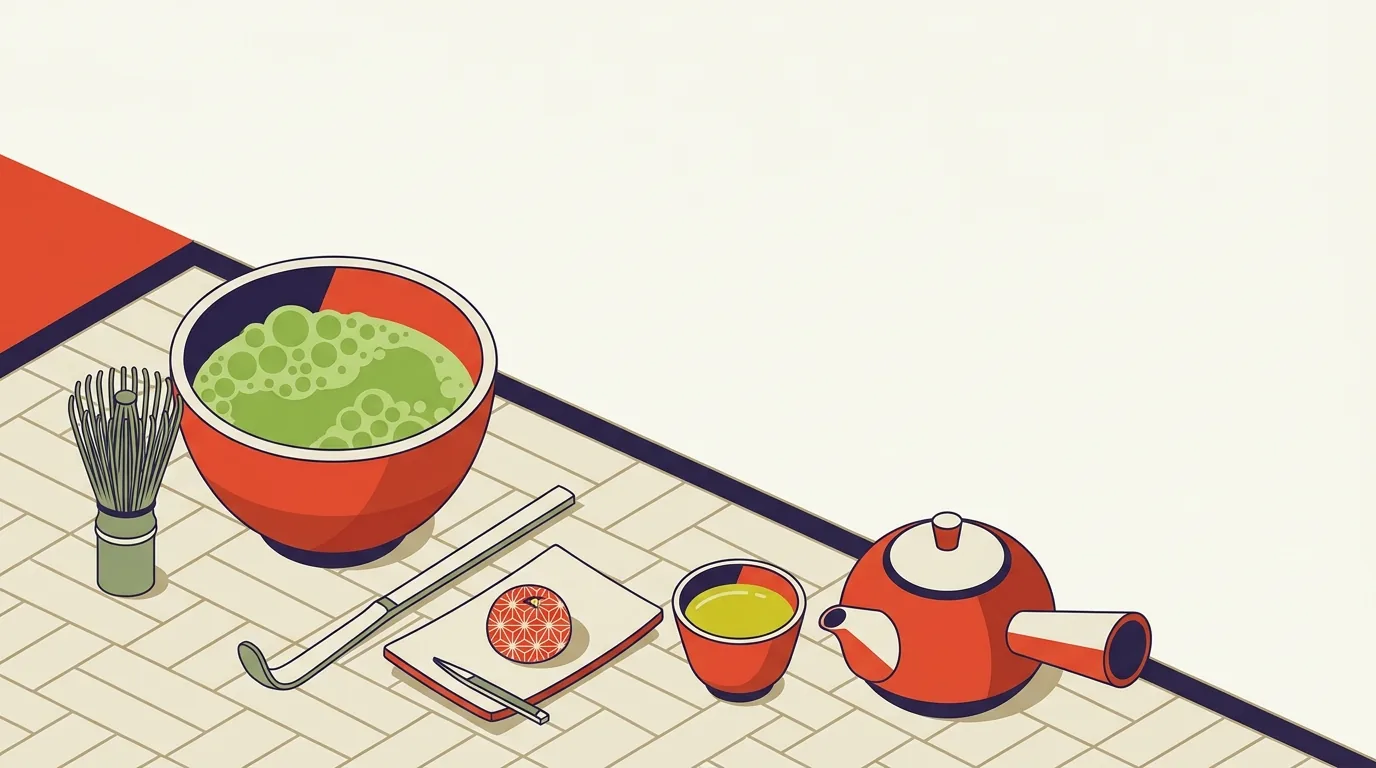
In Japan, “tea” (お茶, ocha) almost always means green tea. It’s served free with meals, sold hot and cold in every vending machine, and waiting for you in every ryokan room. The most famous kind abroad is matcha, but most of what Japanese people drink day to day is sencha. Both come from the same plant, Camellia sinensis. The difference lies in how the leaves are grown, processed and finally drunk.
Same plant, three differences
1. Growing. Most tea bushes grow in full sun. For matcha and gyokuro, farmers cover the bushes with shade for several weeks before the harvest. With less sunlight the leaves turn a deeper green and develop a rich, savory flavor called うま味 (umami), with less bitterness.
2. Processing. Japanese green tea is usually steamed right after picking, which stops the leaves from oxidizing and keeps them green (Chinese green teas are more often pan-fired). For sencha and gyokuro, the steamed leaves are then rolled and dried into thin, needle-like strands. For matcha, the shaded leaves are dried flat without rolling. This leaf is called 碾茶 (tencha). The stems and veins are removed, and the rest is slowly ground into a fine powder, traditionally with a stone mill.
3. Drinking. Sencha is steeped: hot water draws out the flavor, and you throw the leaves away. Matcha is whisked: the powder is mixed into water, so you drink the whole leaf. That’s why matcha tastes thicker and stronger, and why it’s used in sweets and lattes.
Japanese teas at a glance
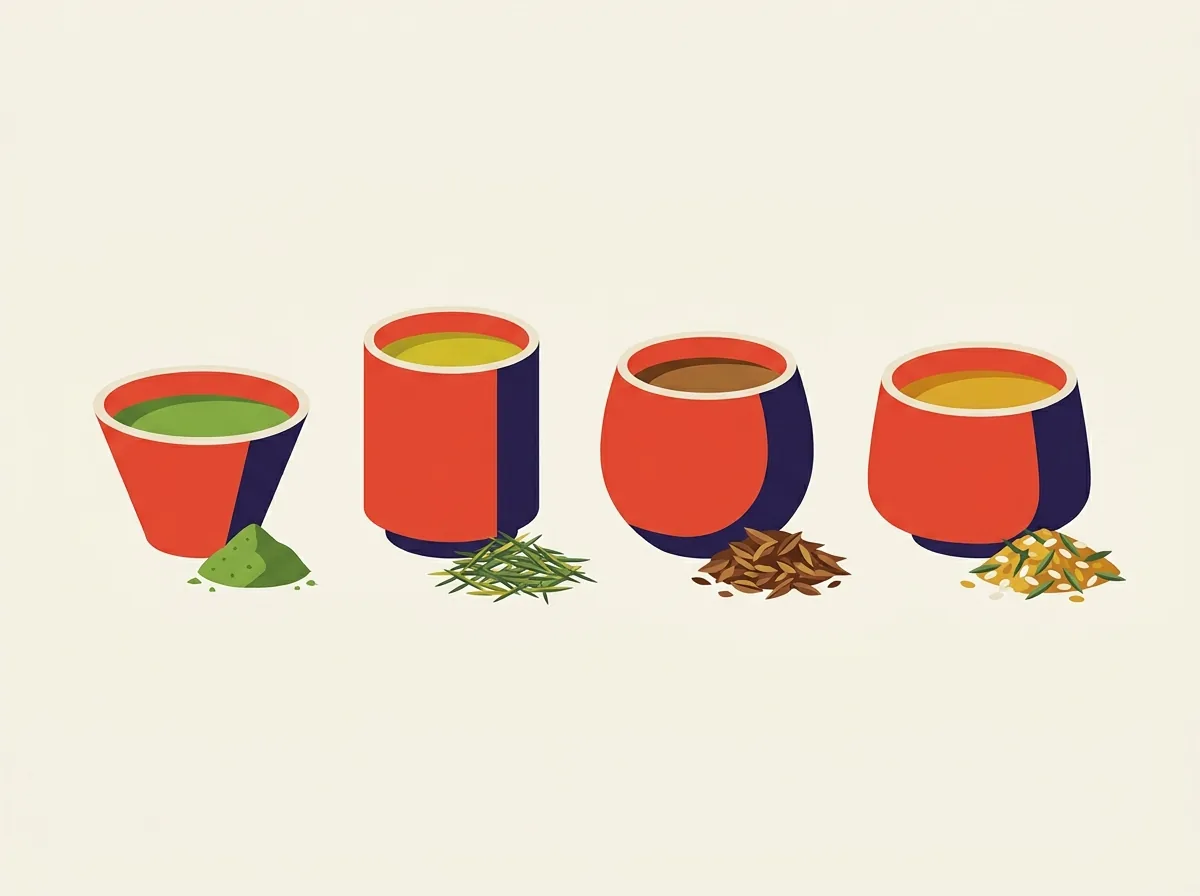
| Tea | What it is | Taste | Caffeine | When it’s drunk |
|---|---|---|---|---|
| Matcha 抹茶 | Shaded leaves ground into powder | Rich, creamy, a little bitter | High | Tea ceremony, tea houses, with sweets |
| Sencha 煎茶 | Steamed, rolled leaves | Fresh, grassy, gently bitter | Medium | Everyday tea at home and work |
| Gyokuro 玉露 | Shaded leaves, steeped | Sweet, deep umami | High | Slowly, in small cups, for guests |
| Hojicha ほうじ茶 | Roasted tea | Toasty, smooth, not bitter | Low | After meals, in the evening |
| Genmaicha 玄米茶 | Green tea mixed with roasted rice | Nutty, light | Low | With meals, any time |
| Bancha 番茶 | Later-harvest, larger leaves | Plain, light | Low | Everyday, often at casual restaurants |
Caffeine levels are rough comparisons and vary by brand and brewing. If you’re sensitive, hojicha and genmaicha are the easy choices for the evening.
Drinking matcha at a tea house
Many tea houses, gardens and temples serve a bowl of matcha with a Japanese sweet (和菓子, wagashi) for a small fee. A formal tea ceremony (茶道, sadō or chadō) has many detailed rules, but guests only need a few basics:
- Eat the sweet first. It comes before the tea, and its sweetness balances matcha’s slight bitterness. Use the small pick or paper provided.
- Receive the bowl with your right hand and place it on your left palm. A small bow to the host, or a quiet thanks, is a nice touch.
- Turn the bowl. The front of the bowl, usually its most decorated side, faces you when it’s served. Turn it clockwise two or three times so you don’t drink from the front. It’s a gesture of modesty.
- Drink in a few sips. Three or four sips is typical. It’s fine, even expected, to make a small slurp on the last one to finish the foam.
- Wipe and admire. Wipe the rim where you drank with your fingers, turn the bowl back so the front faces the host, and take a moment to look at the bowl. Handmade tea bowls are part of the experience.
Nobody expects visitors to get every step right. Following the host’s lead and staying quiet and relaxed matters far more. Sitting in seiza (kneeling) is hard for many people. At most visitor-friendly places it’s fine to shift your legs, and some offer chairs.
Brewing sencha
Good sencha is easy to make at home or in your hotel room. The key is not using boiling water, which brings out bitterness.
- Water: boil it, then let it cool to about 70–80°C. Pouring it into the cups first and then into the teapot is an easy way to cool it down and warm the cups.
- Leaves: about one teaspoon per person in a small teapot (急須, kyūsu).
- Steep: around one minute, then pour. Pour a little into each cup in turns so every cup gets the same strength, and pour out every last drop.
- Second cup: the same leaves are good for another round or two. Use slightly hotter water and a shorter steep.
Gyokuro likes even cooler water, around 50–60°C. Hojicha and genmaicha are more forgiving and taste good with boiling water.
Tea before your bath
Walk into almost any ryokan room and you’ll find a tea set on the low table: a teapot, cups, a tin of green tea, a thermos of hot water and a small local sweet. This welcome tea is a quiet ritual of Japanese inns.
Many Japanese people will tell you to have the tea and sweet before your first bath. The common advice is that a little sugar and water in your body before soaking in hot water can help you avoid feeling light-headed. Whatever the reason, it’s a pleasant way to settle in after a long journey, and the sweet is usually a specialty of the area, so it’s worth trying. Drink water too, before and after bathing.
Where to experience Japanese tea
- Uji, Kyoto. The historic home of high-grade matcha and gyokuro, an easy trip from Kyoto or Nara. The main street to Byōdō-in is lined with old tea shops, cafés and matcha sweets.
- Shizuoka. Japan’s largest tea-producing area. Rows of tea fields spread across the hills, many with views of Mt. Fuji. There are tea museums, farm tours and plenty of sencha to taste.
- Kagoshima. The second-largest producer, in southern Kyushu. Its warm climate means an early harvest. It’s also a great onsen region.
- Tea ceremony experiences. Kyoto has many, in machiya townhouses and temples. In Tokyo, look for classes in traditional gardens or cultural centers. Short sessions in English are widely available and usually include a sweet and a chance to whisk your own bowl.
The first harvest of the year, 新茶 (shincha), arrives around late April to May and is prized for its fresh aroma.
Buying tea as a souvenir
- Matcha grades. “Ceremonial” grade is for drinking straight: bright green, smooth, and more expensive. “Culinary” or cooking grade is for lattes, baking and ice cream. These labels are mostly used for export, so in Japanese shops you may see お薄 (usucha, thin tea) or 製菓用 (seika-yō, for sweets). When in doubt, ask the shop staff.
- Check freshness. Look at the date and buy small amounts. Matcha loses its color and aroma quickly once opened.
- Keep it sealed. Tea is sensitive to air, light, heat and moisture. Keep it sealed, away from sunlight, and use it within a few weeks after opening.
- Easy picks. Sencha and hojicha are cheaper, keep longer, and are easy to brew at home. Tea bags from specialist shops are good gifts too.
Tea and hot springs go well together, and so does a quiet afternoon at a shrine. See how to visit a Japanese shrine.