





Bathing culture
How to stay at an onsen ryokan
A first-timer's onsen ryokan guide: booking, check-in, yukata, bath times, kaiseki dinner and ryokan etiquette, plus tattoo-friendly ryokan to book.
A night at a 旅館 (ryokan), a traditional Japanese inn, is one of the best things you can do in Japan. It is also a little different from a hotel. The day follows a gentle, fixed rhythm: arrive, bathe, eat, bathe again, sleep on the floor, eat again, leave. Once you know the order, it is very relaxing. This guide walks you through a first stay step by step, with notes for travellers with tattoos.
Booking: check the tattoo policy first
Before you look at rooms or prices, check the tattoo rule. It varies from inn to inn, and sometimes from bath to bath inside the same inn. Our map lists each place as tattoo-OK, OK with cover stickers, or private baths only.
A few booking terms you will see:
- 1泊2食付き (ippaku ni-shoku tsuki): one night with dinner and breakfast. This is the standard ryokan plan, and the meals are a big part of the stay. Room-only plans exist, but in a quiet hot-spring town there may be nowhere else to eat at night.
- 和室 (washitsu): a Japanese-style room with tatami mats and futon. 和洋室 (wayōshitsu) adds Western beds in a tatami room, which helps if sleeping on the floor worries you.
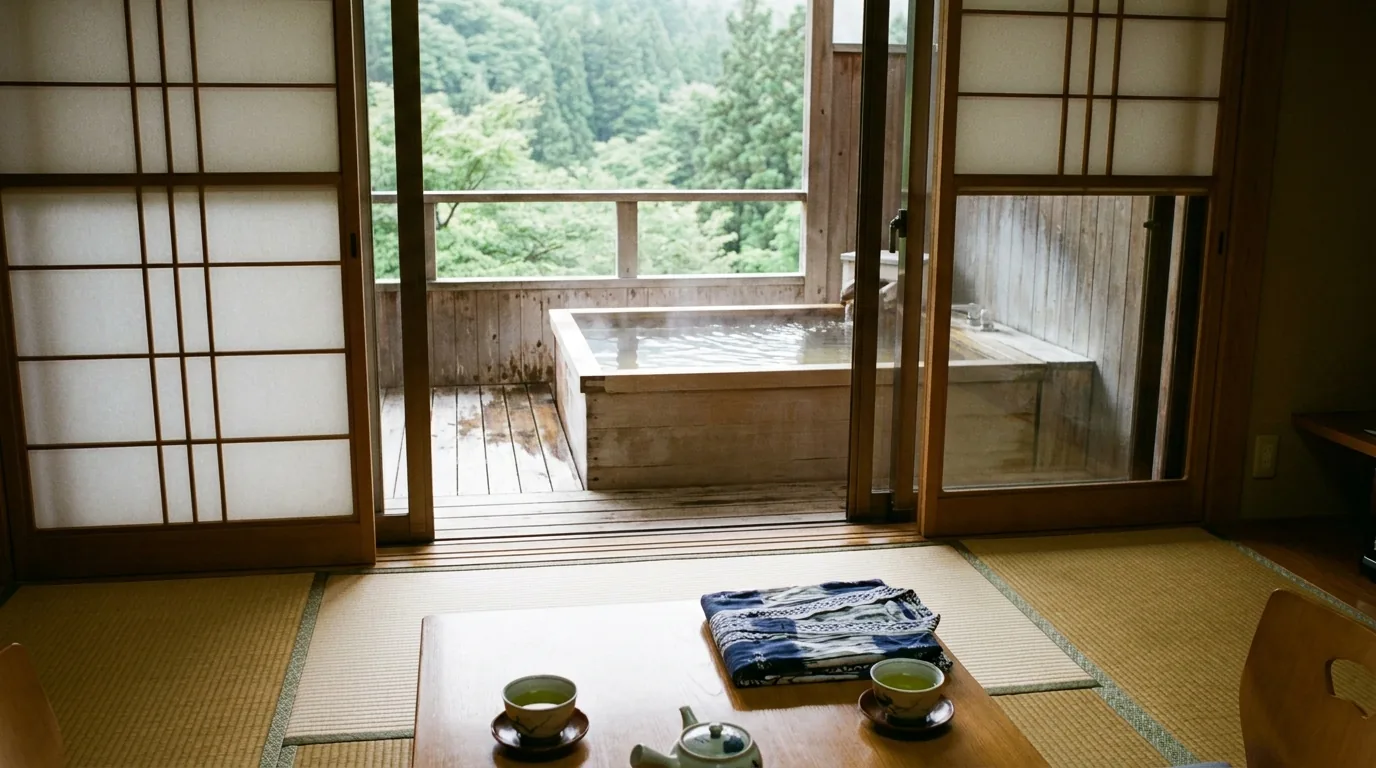
- 露天風呂付き客室 (rotenburo-tsuki kyakushitsu): a room with its own open-air bath. It costs more, but it solves the tattoo question completely. You can soak whenever you like, with no one else around.
Prices are usually per person, not per room, so check the total for your group.
Arrival and check-in
Check-in is usually from 3pm. At the entrance, the 玄関 (genkan), you step out of your shoes and onto the raised floor. Staff may take your shoes, or you’ll leave them on a shelf. Slippers are waiting for you to wear inside the building.
At many ryokan, a staff member, often called the 仲居さん (nakai-san), shows you to your room. They’ll explain the bath hours and meal times, and pour you green tea with a small Japanese sweet on the low table. The sweet is there on purpose: eating something before a hot bath helps keep you from feeling dizzy.
The room
Take your slippers off before you step onto the tatami. Only bare feet or socks go on the mats. The slippers stay at the edge of the room, and there’s often a separate pair for the toilet. Leave those in the toilet.
The alcove in the wall with a hanging scroll and a flower arrangement is the 床の間 (tokonoma). It is a decorative space, so don’t put luggage or sit in it. The small sitting area by the window, with two chairs and a table, is the classic spot for a beer after your bath.
Yukata and tanzen
In the room you’ll find a 浴衣 (yukata), a light cotton robe, and in cooler months a padded jacket called a 丹前 (tanzen) to wear over it. Inside a ryokan the yukata is normal dress everywhere: in the corridors, at the bath, at dinner and at breakfast.
Wrap it left over right, so the left side is on top. Right over left is how the dead are dressed at Japanese funerals, and staff will politely fix it for you. Tie the belt low, around your hips for men and at the waist for women. Our guide to yukata and kimono covers more details.
Bath times and bathing
Ryokan baths usually stay open late into the night and open again early in the morning, for example until 1am and from 5am. Check the hours at check-in. Many inns clean the baths for a few hours in the middle of the night.
At some inns the men’s and women’s baths swap during the night, so you can try both sides. Always check the curtain, the 暖簾 (noren), before you go in: 男 is men and 女 is women, and it may be different in the morning.
Carry the small towel from your room with you. The large towel stays in the changing room, and the small one goes into the bathing area to wash with and to rest on your head. It never goes in the water. The usual rules apply: wash fully at the shower before you soak, and keep your hair out of the water. Many travellers take three baths in one stay: one before dinner, one late at night and one before breakfast.
Dinner
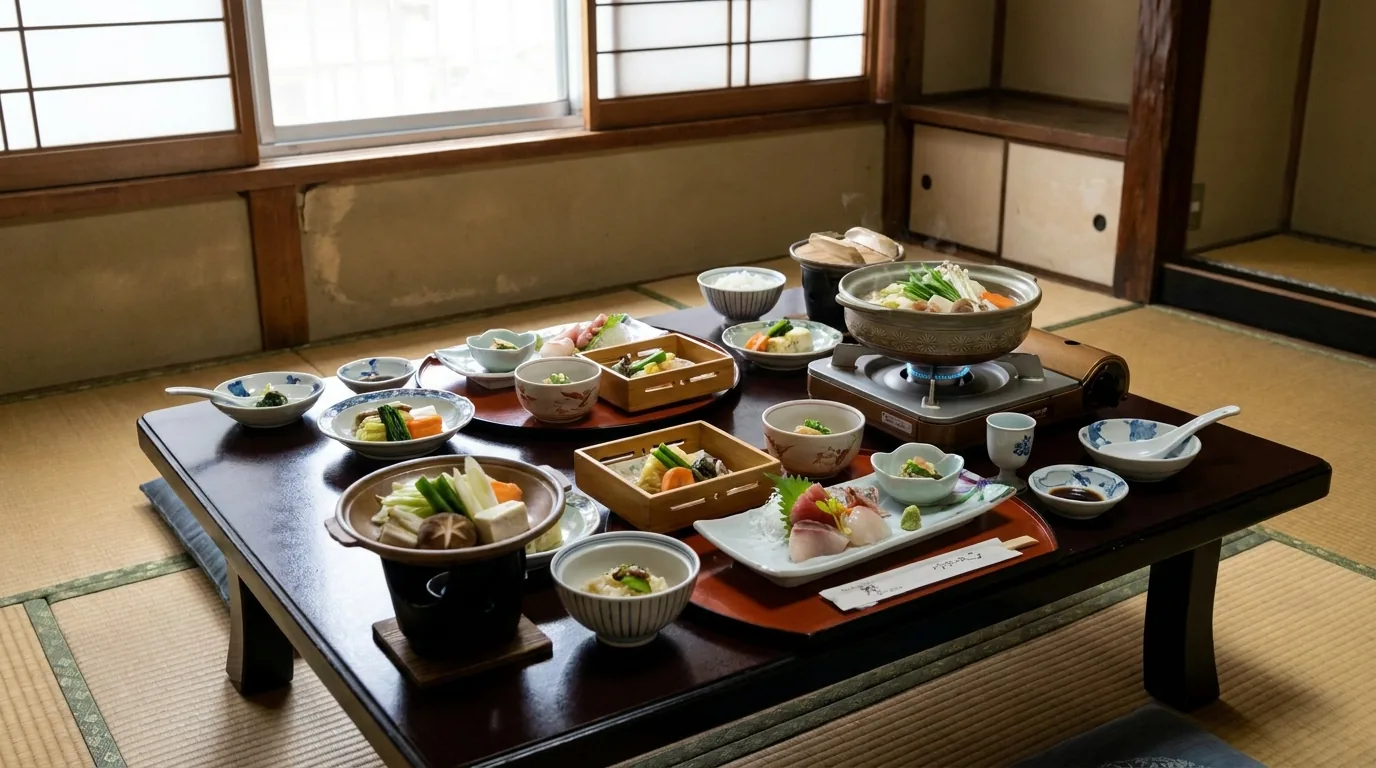
Dinner is usually a 会席料理 (kaiseki ryōri) meal: many small seasonal courses brought out one after another, often including sashimi, a small hot pot and local specialities. Depending on the inn, it’s served in your room or in a dining hall or private dining room.
Dinner has a fixed start time, often between 6pm and 7:30pm, which you choose at check-in. Please be on time, because the kitchen prepares each course for that moment. If you have allergies or dietary needs, tell the inn when you book, not on arrival.
Futon
While you’re at dinner or in the bath, staff come in and lay out your futon on the tatami. At some modern inns the beds are already made or you lay them out yourself. When you get back, the table will have been pushed aside and your bed will be ready.
Breakfast and checkout
Breakfast is at a set time as well, usually around 7–9am. It’s typically Japanese-style: grilled fish, rice, miso soup, pickles and several small side dishes.
Checkout is usually at 10 or 11am. You’ll pay for anything extra at the front desk: drinks from dinner, the minibar, or an added bath reservation. Leave the yukata in the room, and the key at the desk.
Tipping
Tipping is not expected in Japan, including at ryokan. Service is included in the price. Some Japanese guests hand over a 心付け (kokorozuke), a small tip in an envelope, at very high-end inns. It is an old custom and entirely optional. A warm “thank you” at checkout is all anyone expects.
Tips for travellers with tattoos
- Say it in your booking notes. Add a short line in the request field, for example: “I have tattoos. Can I use the large public bath? If not, please tell me about private bath options.” A clear question before you arrive avoids an awkward moment at the bath door.
- Bring cover stickers. Some inns allow small tattoos if they’re covered. See our guide to tattoo cover stickers for sizes and where to buy them.
- Use the private bath. Many ryokan have a 貸切風呂 (kashikiri-buro), a bath you can reserve for your group only, or rooms with their own bath. Our private onsen guide explains how they work.
- Guest-only baths are often more relaxed. Some inns have stricter rules for baths shared with day visitors and looser rules for baths used only by staying guests.
Tattoo-friendly ryokan to try
These are all from our listings. Rules can change, so always confirm with the inn before booking.
- KAI Hakone: a riverside ryokan in Hakone with no tattoo restrictions in the guest-only baths. An easy first stay from Tokyo.
- Gora Hanaougi: also in Hakone. Tattooed guests can use the large bath, and every room has its own open-air bath.
- KAI Kusatsu: in Kusatsu, one of Japan’s most famous hot-spring towns, with no tattoo restrictions in the guest-only baths.
- KAI Kaga: at Yamashiro Onsen in Ishikawa, with the same guest-bath policy as the other KAI inns.
- Hebi no Yu Yukichi: a small inn near Naruko Gorge in Miyagi that welcomes guests with tattoos.
- KAI Beppu: in Beppu, Japan’s hot-spring capital, with no restrictions in the guest-only baths.
Useful Japanese phrases
| Japanese | Romaji | Meaning |
|---|---|---|
| チェックインをお願いします | Chekku-in o onegai shimasu | I’d like to check in, please |
| タトゥーがあります | Tatū ga arimasu | I have a tattoo |
| 大浴場は使えますか? | Daiyokujō wa tsukaemasu ka? | Can I use the large bath? |
| 貸切風呂はありますか? | Kashikiri-buro wa arimasu ka? | Do you have a private bath? |
| お風呂は何時までですか? | Ofuro wa nanji made desu ka? | Until what time is the bath open? |
| 夕食は何時ですか? | Yūshoku wa nanji desu ka? | What time is dinner? |
| ごちそうさまでした | Gochisōsama deshita | Thank you for the meal |
| お世話になりました | Osewa ni narimashita | Thank you for everything (at checkout) |