Bathing culture
Reading the water
Sulfur, salt, acid, iron. A short guide to Japan's hot-spring types, and the notice on the wall that tells you which one you're in.
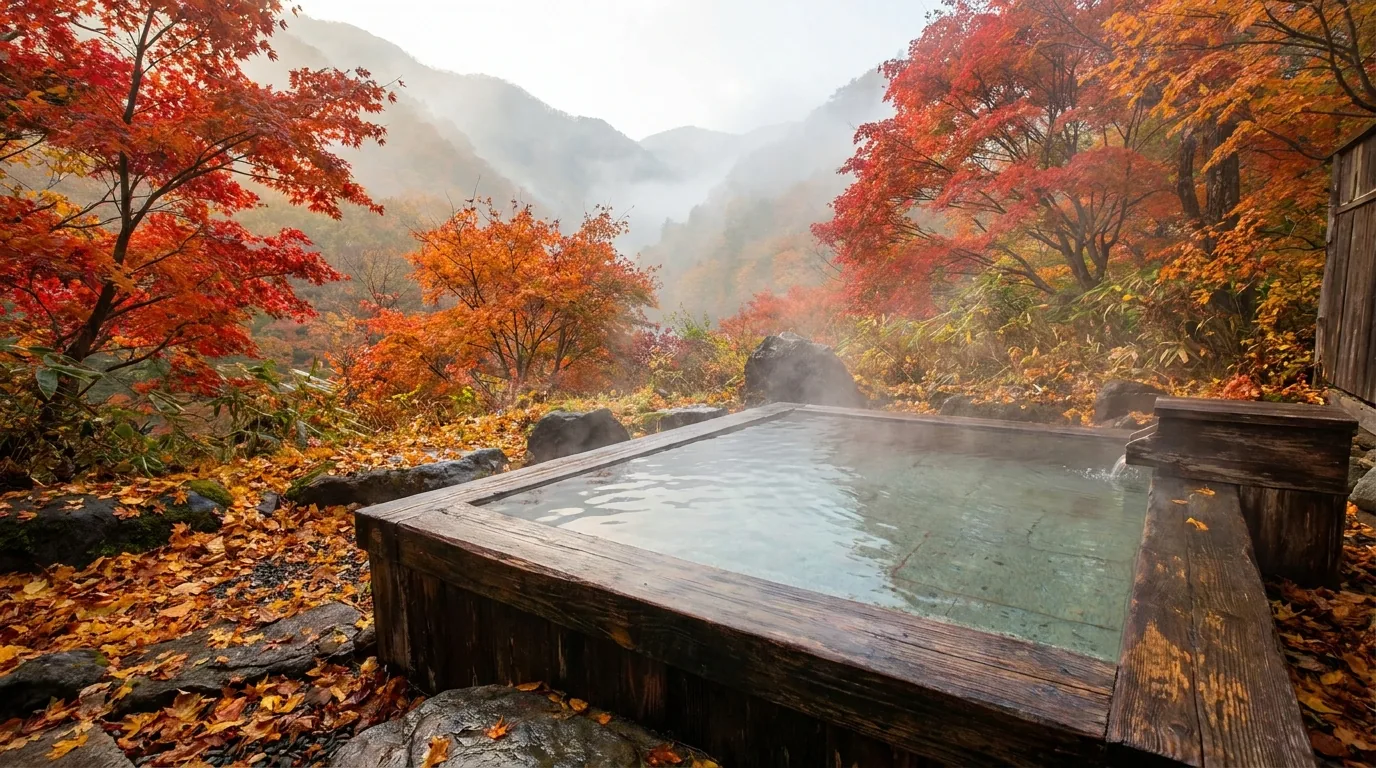
Every onsen in Japan posts an official analysis of its water, usually a framed notice near the changing room called an 温泉分析書. It lists where the spring comes from, its temperature and what’s dissolved in it. You don’t need to read it all. A few key words tell you what to expect.
Common spring types
- Sulfur (硫黄泉, iō-sen). The classic rotten-egg smell, often milky white. Take off silver jewelry, because it turns black.
- Sodium chloride (塩化物泉). Salty and very warming. Often called the “heat bath”, because you stay warm long after you get out.
- Hydrogen carbonate (炭酸水素塩泉). Leaves skin smooth, so it’s sometimes nicknamed 美人の湯, “bath of beauty”.
- Acidic (酸性泉). Strong and can sting small cuts. Kusatsu in Gunma is famous for it. Rinse off afterwards if your skin is sensitive.
- Iron (含鉄泉). Reddish-brown water that stains towels. Arima’s “gold spring” is the best-known example.
- Simple springs (単純温泉). Mild and gentle, easy for first-timers and children.
Words worth knowing
- 源泉かけ流し (gensen kakenagashi): fresh spring water flows through constantly and isn’t recirculated. Bathing purists look for this.
- 加水 / 加温: water added / heated. Normal when a spring is naturally too hot or too cool.
- 循環: recirculated and filtered, common at large facilities.
Does it matter?
Onsen water has been part of Japanese folk medicine for centuries, and each spring lists the conditions it’s traditionally said to help. Treat those as tradition rather than prescription. What you’ll definitely notice is the difference in feel, from silky to sharp to salty. Trying a few is half the fun of travelling between hot-spring towns.